What Are AI Gadgets and How Do They Work
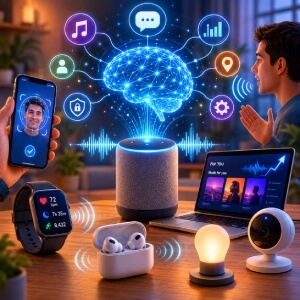
Most people already own one without thinking of it that way. AI gadgets are connected devices that use software to interpret incoming data, respond to user inputs, and improve their responses over time. A smartphone that recognizes your face, a speaker that answers questions, a watch that tracks your sleep patterns – these are all AI gadgets in everyday form.
The engine behind most of them is machine learning. Rather than following a fixed set of rules written by a programmer, these systems identify patterns in data and adjust their behavior based on what they observe. A music app that gets better at predicting your taste after a few weeks of listening is a simple example of this at work.
Adaptive devices take that a step further by adjusting to a user's environment or habits in real time. Noise-canceling earbuds that respond to ambient sound levels do exactly this.
Voice interaction is perhaps the most visible AI feature in consumer products. Smart speakers like Amazon Echo or Google Nest translate spoken language into commands by processing audio through natural language models, turning ordinary speech into searchable, actionable instructions.
Popular AI Devices People Use Today
From kitchen countertops to shirt pockets, AI-powered hardware has quietly become part of daily routines for millions of consumers. Each category solves a different problem, though performance varies considerably depending on internet connection, data history, and which brand ecosystem you're already committed to.
Voice assistants like Amazon Echo and Google Nest answer questions, set timers, and control smart home devices through natural speech. They work well for quick tasks but can struggle with complex, multi-step requests or regional accents.
AI cameras, found in smartphones like the Google Pixel 8, automatically adjust exposure, recognize scenes, and remove blurring in low light. The results are genuinely impressive, though heavy processing sometimes strips photos of natural texture.
Smart earbuds such as Sony's WF-1000XM5 use machine learning to filter background noise in real time, adapting to changing environments like busy streets or open offices.
Translation devices like the Timekettle WT2 Edge handle live, two-way conversation across languages, useful for travel though accuracy still drops with fast speech or technical vocabulary.
Robot vacuums, particularly the iRobot Roomba j7+, map room layouts, avoid obstacles, and schedule cleaning automatically. Some might argue the setup process is more involved than advertised, but day-to-day use is genuinely hands-off.
How AI Improves Convenience and Fits Into Daily Life
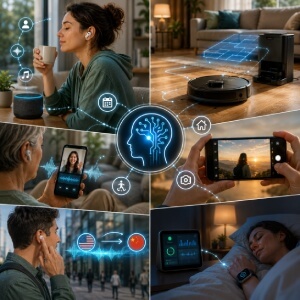
Personalization is where AI-powered devices earn their keep. A smart speaker like Amazon Echo learns which playlists you favor on Monday mornings versus Friday evenings. Earbuds such as Sony's WF-1000XM5 adjust noise cancellation based on your environment and listening habits over time. These aren't dramatic transformations – they're small calibrations that quietly reduce friction.
Automation handles the repetitive work most people forget they're doing. Robot vacuums like the Roomba j7+ map floor plans, avoid obstacles, and run on a schedule without any input after setup. Google Calendar's AI suggests meeting times by reading existing commitments and flagging conflicts before they happen.
Accessibility features extend these benefits to users who need them most. Live Caption on Android transcribes audio in real time, while hearing-enhancement modes in newer earbuds amplify conversation frequencies selectively.
Daily scenarios tie it all together. A phone camera automatically adjusts exposure for a backlit subject. A translation earpiece handles real-time conversation across languages. The convenience is most reliable when the device addresses something specific – a repeated task, a consistent need, a predictable gap.
Connected AI Devices Are Becoming Everyday Helpers
Ordinary tasks are where these gadgets really show their, value. Voice assistants handle questions, create reminders, and manage smart home setups without asking for a single tap. AI cameras identify faces and nudge the exposure settings on their own, automatically. Smart earbuds turn spoken language into another language in almost real time. Robot vacuums build a map of the home’s floor plan and clean on a recurring timetable. Personalization links all of this together, the more a device is used, the smarter it responds to personal routines, tastes, and needs. Automation takes care of the repetitive chores, while accessibility tools extend these advantages to people with visual or hearing impairments. There is no denying that consumer AI tech still has boundaries, and not every device delivers equally well on its claims. Even so, the category keeps expanding fast analysts at IDC estimated the global market for AI enabled devices will top 1.4 billion units shipped each year by 2025. As machine learning gets better and the price of hardware drops, capable AI devices will land in more homes than ever before.